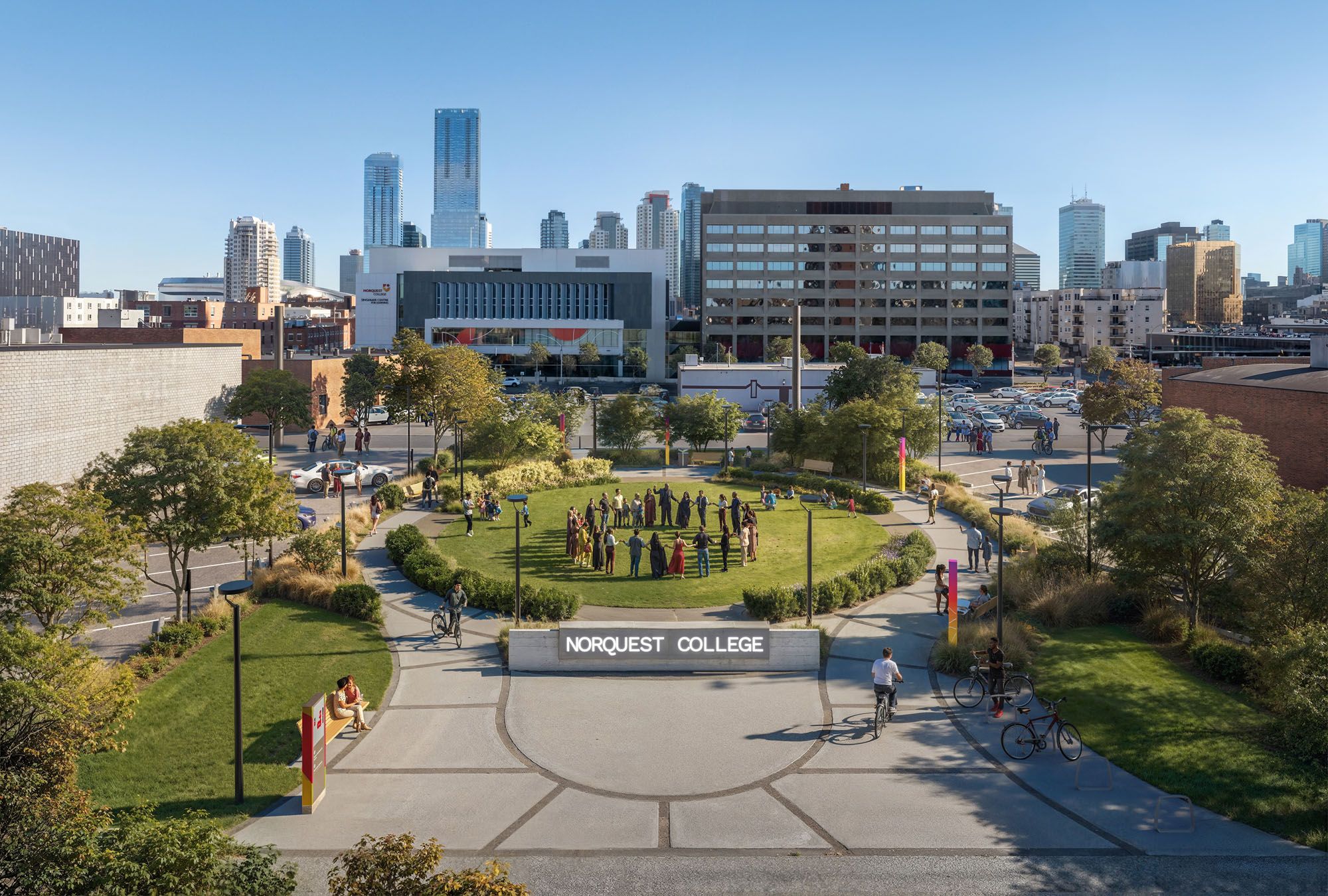
109 Street Park, NorQuest College
Urban Interconnectedness
109 Street Park transforms a former parking lot into an inclusive, sustainable greenspace where NorQuest College, the city, and Indigenous culture meet.
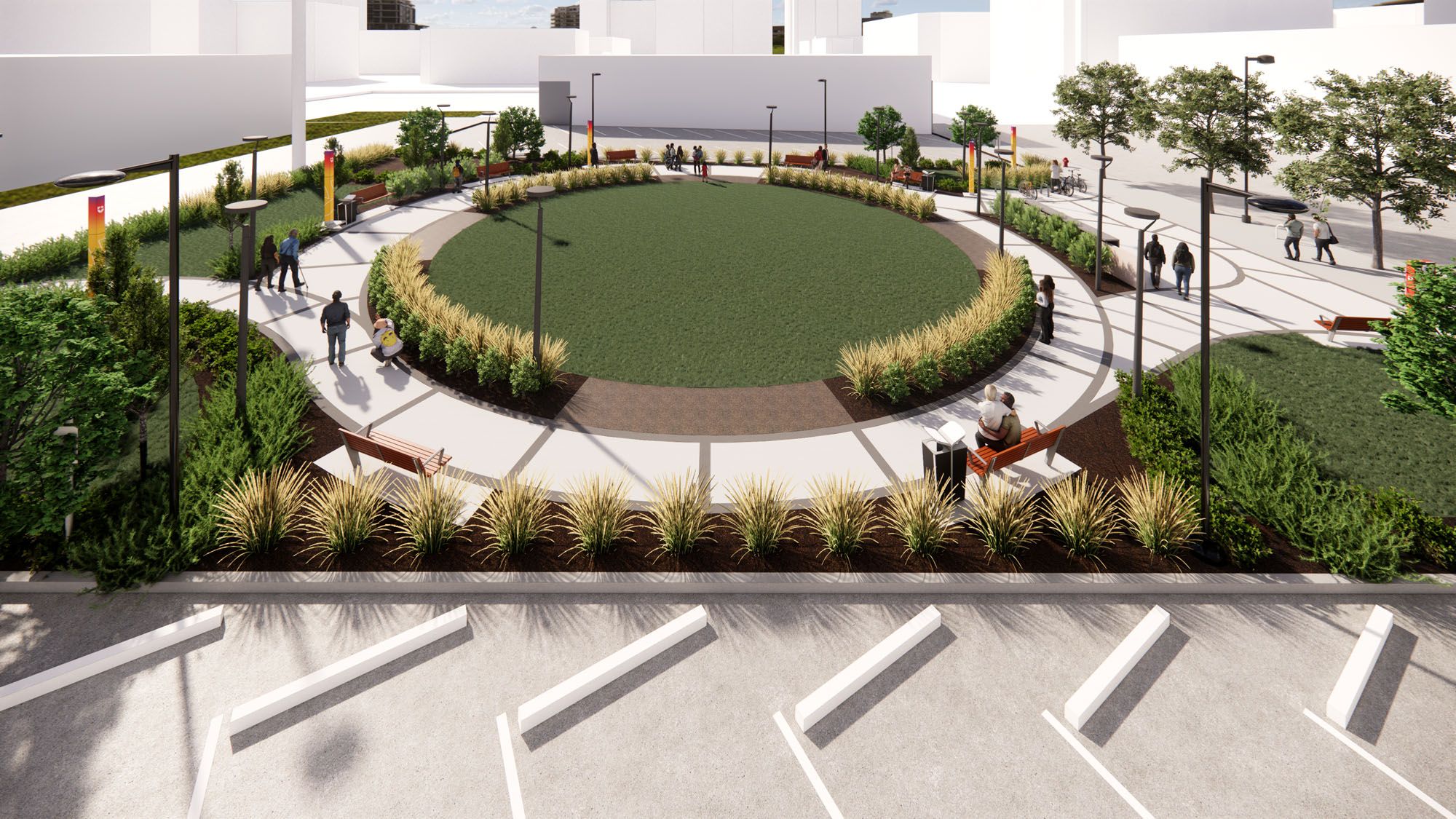
Developed with guidance from the college’s Indigenous Elders and the campus community, the park draws inspiration from the Medicine Wheel. Four pathways extend in the cardinal directions, connecting the campus to the city. A central circular lawn provides an open, accessible space for gathering, events, or quiet reflection. Surrounding Indigenous and native plantings echo the Medicine Wheel’s colours and elements, representing mental, spiritual, physical, and emotional connections.
The park balances cultural storytelling with everyday functionality. Benches, bike racks, lighting, and clear signage guide movement and support community use. Sustainable features, including permeable surfaces, native plantings, and energy-efficient lighting, promote biodiversity and responsible water management. Adjacent parking remains accessible but is thoughtfully screened through landscaping that preserves sightlines and safety.
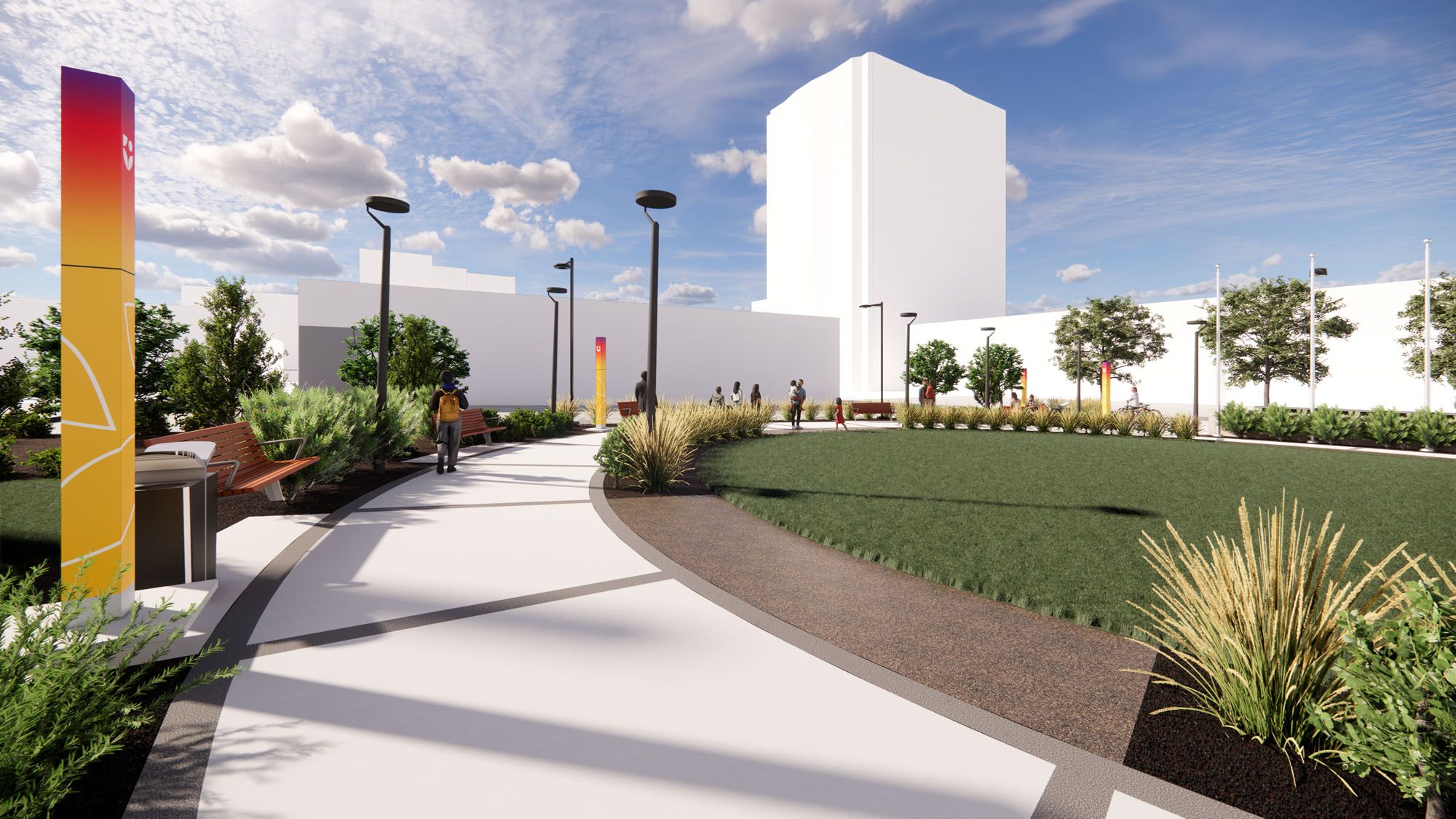
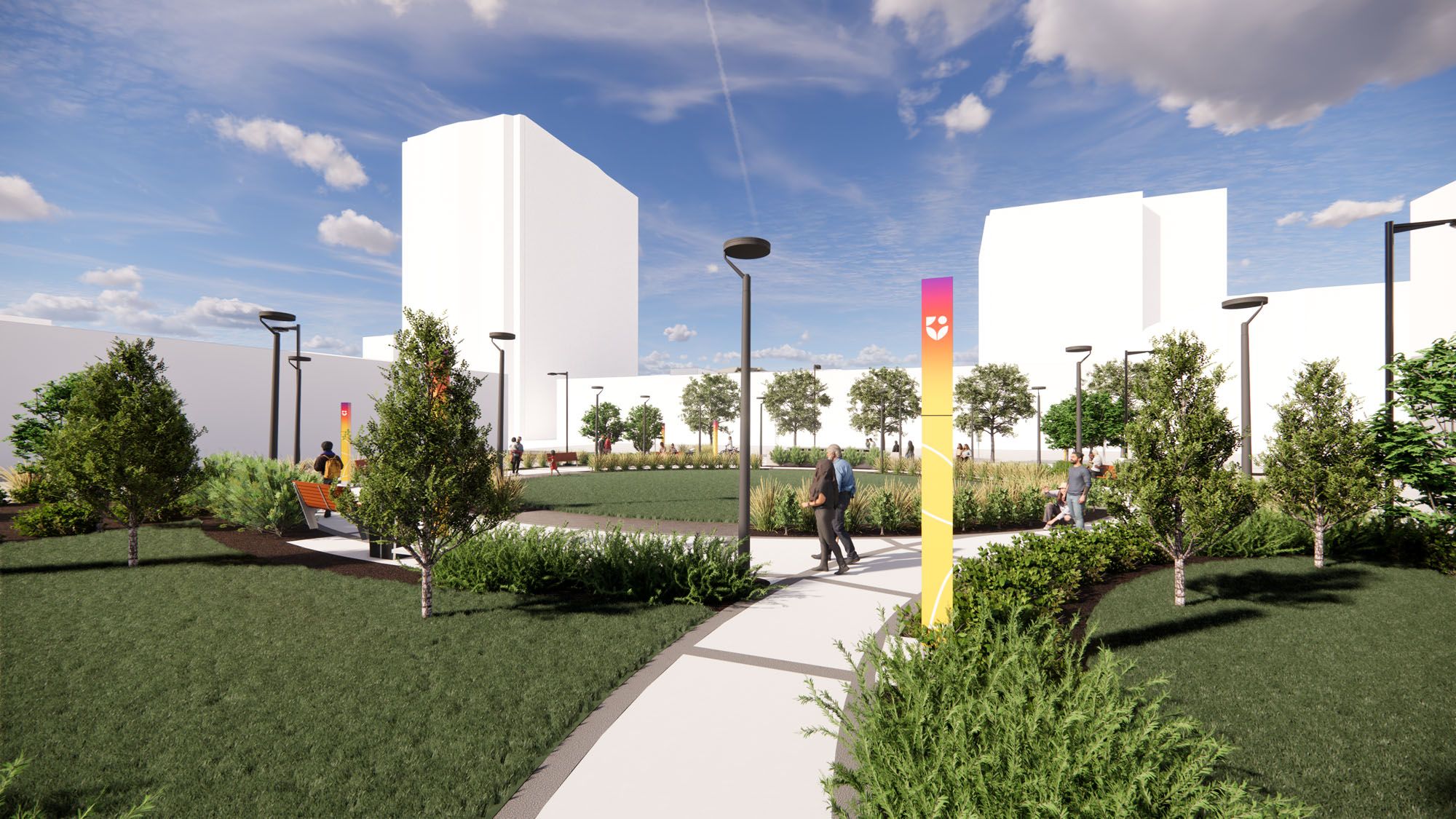
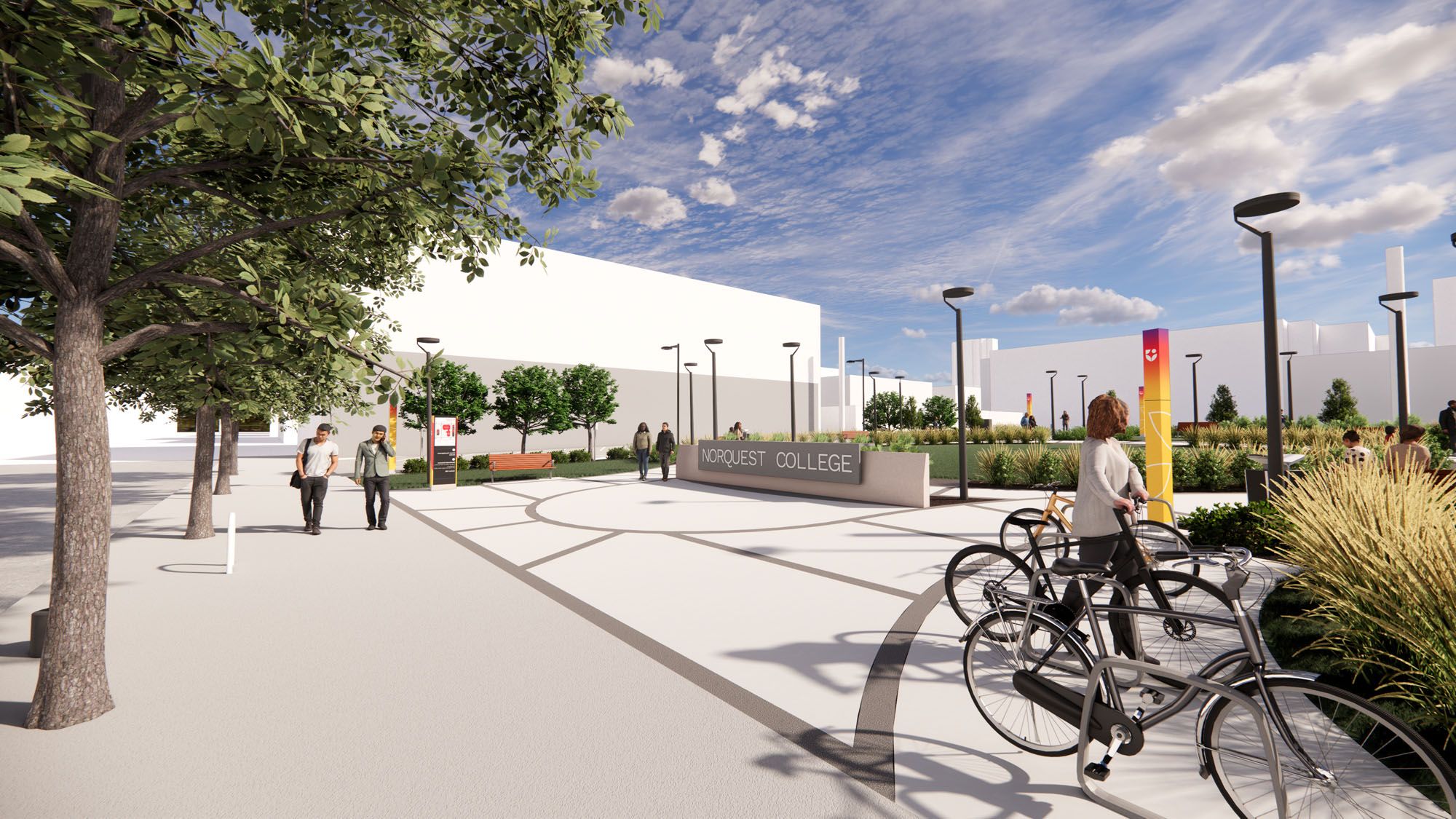
Situated along one of Edmonton’s busiest arterial routes, the park strengthens the connection between campus and city. Shaded walkways, seasonal lighting, and resilient plantings ensure year-round enjoyment. The project enhances the streetscape, improves pedestrian access, and creates a visible gateway that invites both students and the wider community to gather, explore, and connect.
Through cultural collaboration, environmental stewardship, and thoughtful design, 109 Street Park exemplifies urban renewal that is people-centred, sustainable, and rooted in reconciliation. It celebrates Indigenous culture, fosters learning and engagement, and offers a welcoming space that bridges campus, city, and community across seasons.
“The design approach is innovative in the way that it uses an Indigenous framework as a fundamental planning approach, as opposed to adding Indigenous motifs or accents as an afterthought.”